
Performance Review Season: The Small Behaviors That Shape Big Culture
Published on March 4, 2026
It’s performance review season.
Which means many managers are sitting with two simultaneous truths:
-
There are people doing extraordinary work.
-
And there are behaviors — small, repeated, easy-to-ignore behaviors — that are quietly eroding trust and momentum.
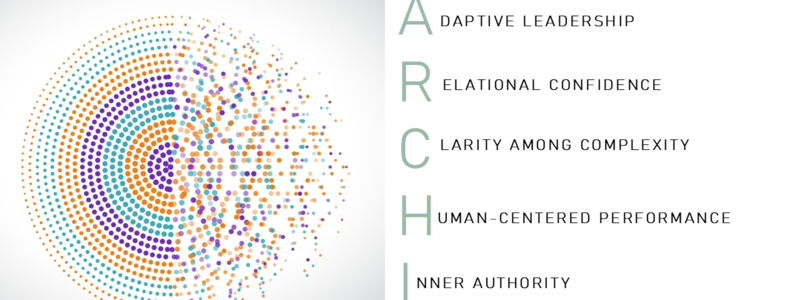
Human-Centered Performance, the “H” in ARCHI, is about holding both.
It is not soft.
It is not punitive.
It is not personality-driven.
It is not punitive.
It is not personality-driven.
It is the disciplined practice of aligning behavior with responsibility — in a way that strengthens both outcomes and dignity.
Performance reviews are one of the few structured moments we have to recalibrate culture. If we use them well, they become less about scoring the past and more about strengthening the future.
Discover: What Are We Actually Evaluating?
Most managers feel comfortable addressing visible performance gaps:
-
Missed deadlines.
-
Budget errors.
-
Unmet targets.
-
Incomplete deliverables.
But the harder conversations are about what I call cultural drag behaviors — the small, consistent actions that evade formal accountability but shape culture daily.
You’ve likely heard them:
-
“Why are we doing this?” (after the rationale has already been shared)
-
“I don’t understand.” (without seeking clarification)
-
“This isn’t how we used to do it.”
-
“Well, I guess we have to.” (said to colleagues responsible for implementation)
Or even subtler:
-
Continuing to debate a decision in side conversations after it has been formally made.
-
Quietly creating workarounds.
-
Withholding energy from implementation because you would have chosen differently.
None of these behaviors alone trigger HR action.
But collectively, they shape climate.
They create confusion.
They create doubt.
They create inequity for those who are working to implement decisions faithfully.
They create doubt.
They create inequity for those who are working to implement decisions faithfully.
And that makes them performance issues.
Develop: What Does “Support” Actually Mean?
Let’s be clear.
If you are a leader or manager and a decision has been made — to reorganize, reallocate resources, pause your pet project, adjust staffing, change systems — you may not have had the final say.
But you do have positional responsibility.
Support does not mean:
-
“I like this.”
-
“This is what I would have done.”
-
“I’ll just work around it.”
-
“I’ll comply publicly and criticize privately.”
-
“I’ll do it myself so others don’t have to.”
Support means:
"In my role, I will enable the successful implementation of whatever decision is made by the appropriate body or authority in this organization."
That includes:
-
Actively promoting clarity.
-
Reducing confusion.
-
Aligning messaging.
-
Not undermining the decision — directly or indirectly.
Support is not emotional agreement. It is professional maturity.
A Practical Example
Imagine this scenario:
A library decides to pause a long-standing initiative for one year to redirect resources toward a new strategic priority.
A manager who loved that initiative says in a team meeting:
“I still don’t really see why we’re doing this, but I guess this is where we’re headed.”
The statement sounds mild. Maybe even honest.
But here’s the impact:
-
Staff feel uncertain.
-
Confidence in the decision drops.
-
Implementation energy weakens.
Now imagine instead:
“This wasn’t the direction I initially expected. But the decision has been made, and our focus now is to make this shift successful. Let’s talk about what that requires from us.”
Notice the difference.
Same internal feelings.
Different professional behavior.
Different cultural outcome.
Different professional behavior.
Different cultural outcome.
That is Human-Centered Performance.
Demonstrate: How to Address This in a Review Conversation
Instead of labeling someone as “negative” or “resistant,” anchor the feedback in role clarity.
You might say:
"In your role, once a decision is made by the appropriate authority, part of your responsibility is to help implement it effectively. I’ve noticed that after recent decisions, you’ve continued to question or critique them in ways that create confusion for others. I want to talk about what support looks like at your level."
Or:
"When you say 'I don’t understand' without following up to seek clarity, it leaves ambiguity in the system. At this level, I need you to either get the clarity you need or align and move forward."
Or:
"It’s absolutely appropriate to challenge ideas during the decision-making process. Once the decision is made, the expectation shifts from debate to implementation. That shift needs to be consistently demonstrated."
This is not about silencing disagreement.
It is about sequencing it appropriately.
Challenge during deliberation.
Alignment during implementation.
Alignment during implementation.
What’s Often Underneath
Let’s not ignore the human layer.
Ongoing questioning or subtle resistance often reflects:
-
Fear of losing influence.
-
Attachment to identity (“This has been my project for years.”)
-
Fatigue from repeated change.
-
Distrust of leadership.
Those are real experiences.
They deserve conversation.
But they cannot quietly sabotage execution.
Human-Centered Performance does not erase emotion.
It integrates it — without allowing it to undermine responsibility.
Distinguish: The Standard at Senior Levels
The higher the role, the greater the responsibility to model alignment.
An individual contributor expressing frustration is different from a manager doing so.
Why?
Because managers are culture multipliers.
Their tone becomes permission.
Their ambiguity becomes confusion.
Their resistance becomes legitimacy for others to resist.
Their ambiguity becomes confusion.
Their resistance becomes legitimacy for others to resist.
And conversely:
- Their steadiness becomes stability.
- Their clarity becomes momentum.
- Their alignment becomes cohesion.
- Their clarity becomes momentum.
- Their alignment becomes cohesion.
That is the distinguishing mark of professional maturity.
What to Reinforce
Performance reviews are not only for correction. They are an ideal setting to model positive feedback. Positive feedback should actually be given 3x as often as corrective feedback, so plan accordingly (and do so outside of the annual process)
Name when someone:
-
Raises thoughtful concerns in the right forum.
-
Seeks clarity before expressing confusion publicly.
-
Aligns visibly once a decision is made.
-
Helps others move forward, even when the path wasn’t their preference.
-
Models steadiness during uncertainty.
For example:
"I appreciated how you voiced your concerns during the planning phase and then fully supported the final direction once it was decided. That strengthened trust across the team."
That is Human-Centered Performance in action.
Not passive compliance.
Not performative agreement.
Professional alignment.
Not performative agreement.
Professional alignment.
As You Enter Review Season, Try This:
1. Name one specific behavior you have been tolerating — and write the sentence you will use to address it.
Not the general issue. The exact behavior.
What will you say? Out loud. In the room.
Not the general issue. The exact behavior.
What will you say? Out loud. In the room.
2. Identify one person whose subtle resistance is creating drag — and schedule the conversation this week.
Don’t wait for the perfect phrasing.
Clarity delivered with care is better than silence delivered politely.
Don’t wait for the perfect phrasing.
Clarity delivered with care is better than silence delivered politely.
3. Clarify, in writing, what “support” looks like at each level of your team.
For example:
For example:
-
What does support look like for an individual contributor?
-
For a supervisor?
-
For a senior manager?
If it’s not explicit, it’s interpretive.
If it’s interpretive, it’s inconsistent.
If it’s interpretive, it’s inconsistent.
4. Choose one recent decision — and publicly model alignment around it.
Even if you would have chosen differently.
Even if you’re still adjusting internally.
Even if you would have chosen differently.
Even if you’re still adjusting internally.
Say something like:
“The decision has been made. Our responsibility now is to implement it well. Let’s focus on what that requires.”
Culture watches what you reinforce.
5. Replace personality language with behavior language in every review.
Instead of:
Instead of:
-
“You can be negative.”
Try: -
“After decisions are made, I’ve observed you continuing to critique them in team settings. That creates confusion for implementation.”
Specific behaviors create change.
Labels create defensiveness.
Labels create defensiveness.
6. During each review conversation, explicitly define the shift from debate to implementation.
Try:
Try:
“In this role, it’s appropriate to challenge ideas during deliberation. Once a decision is made, the expectation shifts to visible alignment. That shift needs to be consistent and observable in how you communicate and lead.”
Make the standard visible.
7. End every performance conversation with a forward commitment.
Ask:
Ask:
“What will we see differently in the next 60 days that demonstrates this has shifted?”
If there is no observable behavior change defined, there is no accountability.
8. Audit your own modeling in real time.
After your next leadership meeting, ask:
-
Did I align publicly?
-
Did I leave ambiguity?
-
Did I signal frustration instead of steadiness?
Your team learns more from your tone than from your policies.
Performance review season is not about documenting the past.
It is about resetting expectations for the future.
Human-Centered Performance is not passive reflection.
It is disciplined clarity, practiced consistently.
So the real question is not:
“Where have I avoided discomfort?”
It is:
“What conversation will I initiate this week to strengthen alignment?”
That’s where culture actually shifts.